Why Regular Cleaning Isn't Enough: A Safety and Compliance Guide to Trauma Scene Clean-Up
When something traumatic happens in a property, the instinct is to deal with it quickly and quietly. To clean it up, move on, and not think about it anymore.
That instinct is completely understandable. But when a space has been affected by a traumatic event, an unattended death, a violent incident, or a serious accident, what looks clean and what is actually safe are two very different things.
What Is Trauma Cleaning?
Trauma cleaning is the professional process of decontaminating, sanitising, and restoring a property after an event involving biohazardous material, blood, bodily fluids, or decomposition. It is not an extension of regular cleaning. It is a certified, regulated discipline at the intersection of public health, safety compliance, and genuine human care.
In Australia, trauma cleaning businesses must hold EPA licensing to handle and dispose of biohazardous waste. The WHS Act governs how materials are managed on site, and clinical waste disposal must comply with state environmental protection legislation. These are legal obligations, not voluntary standards.
Key Takeaways
- Trauma cleaning is a certified, regulated profession, not an extension of regular cleaning
- Biological material is largely invisible and cannot be removed with household products
- Pathogens, including Hepatitis B, Hepatitis C, HIV, and MRSA, can survive on surfaces for hours or days
- A space that looks clean after a trauma event is not necessarily safe
- Professional intervention is legally required in most cases involving blood, bodily fluids, or decomposition
- The right provider brings EPA licensing, IICRC certification, and a trauma-informed approach
What Health Risks Exist at Trauma Scenes Involving Biohazards or Decomposition?
The danger at a trauma scene is largely invisible. Blood, bodily fluids, and decomposition material carry pathogens that cannot be seen, smelled, or removed with household products.
The Pathogens That Pose the Greatest Risk
- Bloodborne pathogens, including Hepatitis B, Hepatitis C, and HIV, can all survive on surfaces for hours or days
- Bacteria, including MRSA and other antibiotic-resistant organisms that thrive in decomposing organic material
- Airborne contaminants released during decomposition, harmful gases and microscopic particles, are inhaled without any visible sign
The risk is not determined by the volume of visible material but rather by whether the scene has been properly decontaminated.
The Particular Risk of Unattended Deaths
When a death goes undiscovered, decomposition fluids penetrate deeply into flooring, subfloor materials, wall cavities, and furnishings. The affected area is far larger than it appears, and contamination continues to spread the longer it remains untreated.
How Can Improper Trauma Clean-Up Affect Future Occupants' Health?
A trauma scene cleaned to look clean but not properly decontaminated does not become safe. Pathogens remain on porous materials, inside structural elements, and in the air, posing ongoing risks to anyone who uses the space.
For rental properties, tenants may not know what occurred. For commercial premises, it creates health and legal liability for building owners. Persistent odour returning after surface cleaning is almost always evidence of deeper contamination requiring professional intervention.
Why Is Specialist Sanitisation Required After Unattended Deaths or Violent Trauma?
Because the risk is not only on the surface. Flooring, carpet underlay, plasterboard, and timber framing can all retain biological material invisible to the naked eye long after a surface clean. A specialist team brings:
- Hospital-grade disinfectants registered on the Australian Register of Therapeutic Goods
- HEPA filtration systems to address airborne contamination
- Negative air pressure containment to prevent spread to unaffected areas
- Licensed clinical waste disposal a legal requirement under Australian environmental protection legislation
None of these is achievable by an untrained person with household cleaning products.
Can Trauma Scenes Be Cleaned Without Specialists?
In the vast majority of cases involving blood, bodily fluids, or decomposition, professional intervention is both legally required and practically necessary.
When Professional Help Is Non-Negotiable
- The incident involves decomposition or an unattended death
- Blood or bodily fluid has penetrated porous surfaces, such as flooring, carpet, plasterboard, or timber
- The incident involves a known or suspected infectious disease
- Airborne contamination is a risk
What Makes DIY Unsafe
Most people attempting a trauma clean-up have no awareness of the full extent of contamination. Without moisture metres, HEPA filtration, and hospital-grade disinfectants, the result is a space that looks clean but remains hazardous. There is also a high psychological cost to trauma scenes, which are deeply distressing environments, and attempting this work without professional support can cause lasting harm.
How Do Professional Trauma Cleaners Handle Biohazards Differently?
A regular cleaning service removes visible dirt. A professional trauma cleaning service decontaminates a fundamentally different process.
Step 1: Scene Assessment - Full extent of contamination identified, including penetration into structural materials.
Step 2: Containment - Physical barriers and negative air pressure isolate the affected area.
Step 3: Removal - Porous materials that cannot be decontaminated in place are removed and disposed of as clinical waste.
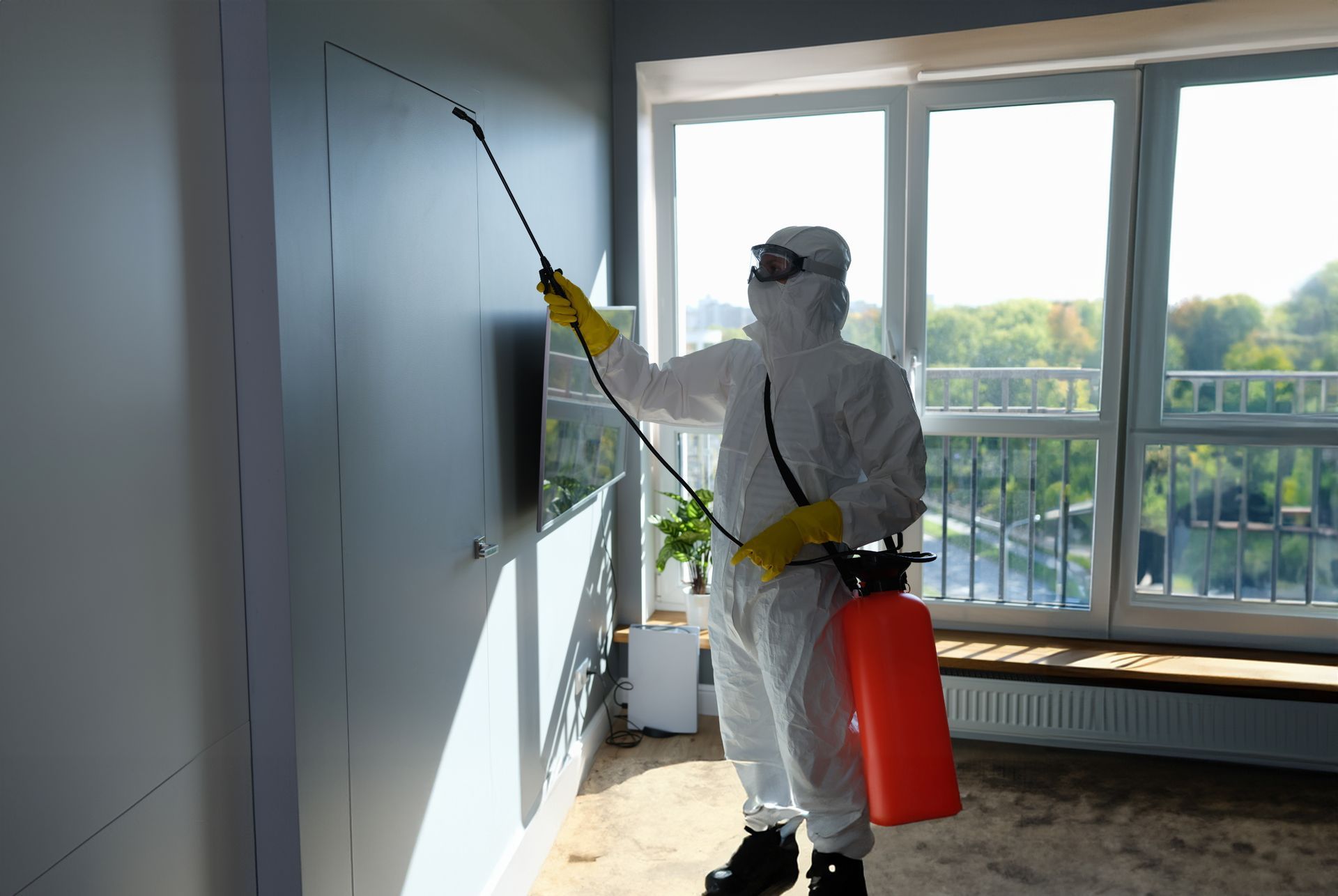
Step 4: Hospital-Grade Decontamination - TGA-registered disinfectants applied across multiple passes with verification between stages.
Step 5: Odour Remediation - Specialist equipment neutralises odour-causing compounds at a molecular level.
Step 6: Verification and Documentation - The scene is tested and confirmed safe before clearance is given.
How Do I Choose a Qualified Trauma Cleaning Company in Sydney?
What to Look For
- EPA licensing for clinical and biohazardous waste handling in NSW
- IICRC TCST certification based on the ANSI/IICRC S540 Standard
- WHS compliance, including documented safe work method statements and full PPE provision
- Transparent communication about scope, process, and expected outcome
- Discretion: the ability to work without drawing attention to the property or situation
Red Flags to Watch For
- Cannot provide EPA licensing or IICRC certification when asked
- Quotes without conducting a site assessment
- Cannot clearly explain containment and waste disposal procedures
- Does not provide documentation on completion
What Certifications Should Trauma Cleaners Meet in Australia?
At minimum: EPA licensing, IICRC TCST certification, and full WHS compliance. Beyond credentials, look for a provider with a genuinely trauma-informed approach. Trauma scenes involve people at some of the most difficult moments of their lives. The best providers understand they are not just restoring a physical space, they are restoring someone's sense of safety.
At Apex Restore, technicians hold IICRC certification alongside training in trauma-informed care and mental health first aid because how a team communicates and behaves on site matters as much as the quality of the decontamination.
What Questions Should I Ask Before Hiring a Trauma Clean-Up Specialist?
- Do you hold EPA licensing for biohazardous waste in NSW?
- Are your technicians IICRC TCST certified?
- Do you conduct a site assessment before quoting?
- How do you contain the area and prevent cross-contamination?
- Are your disinfectants TGA-registered against bloodborne pathogens?
- Do you provide documentation on completion?
- Do you work with insurance companies?
A properly qualified company will answer every one of these without hesitation.
The Bottom Line
Trauma scenes are complex, emotionally difficult, and if not handled correctly, genuinely dangerous for everyone who enters the space. Regular cleaning was never designed to address them.
The right response is a professional team with the training, certification, equipment, and human understanding to handle the situation properly, giving everyone affected the certainty that it has been done right.
Get in touch with Apex Restore today because this is not a job for anyone other than the right team.
Frequently Asked Questions
Is trauma cleaning covered by insurance in Australia?
In many cases, yes. Home and contents insurance policies often cover trauma scene clean-up, particularly in cases of accidental death or crime. It is worth contacting your insurer as early as possible and engaging a trauma cleaning company that can provide the documentation insurers need to process a claim. Apex Restore works directly with insurance companies and provides detailed reports as standard.
How quickly does a trauma scene need to be cleaned?
As quickly as possible. Biological material continues to penetrate porous surfaces and structural materials the longer it remains. Airborne contamination also increases over time, particularly in unattended death situations. Early intervention limits the scope of decontamination required and reduces the overall cost of the job.
Can the property be used after a trauma clean-up?
Yes, once a professional decontamination is complete and verified, the property is safe for normal use. A professional trauma cleaning company provides verification testing and documentation confirming the space meets safe standards before it is cleared for reoccupation.
Who is responsible for organising trauma clean-up: the family, the landlord, or the agent?
This depends on the circumstances and the tenure of the property. For owner-occupied homes, responsibility typically rests with the estate or next of kin. For rental properties, landlords generally hold the obligation to ensure the property is safe before it is reoccupied. Property managers and real estate agents often coordinate this process on behalf of the landlord. Apex Restore works with all parties and can liaise with legal, insurance, and estate representatives as required.
Does trauma cleaning also address odour?
Yes. Professional decontamination includes specialist odour remediation using equipment that neutralises odour-causing compounds at a molecular level. If odour persists after a clean, it is a sign that the decontamination is incomplete and that biological material remains in the structure of the property.